
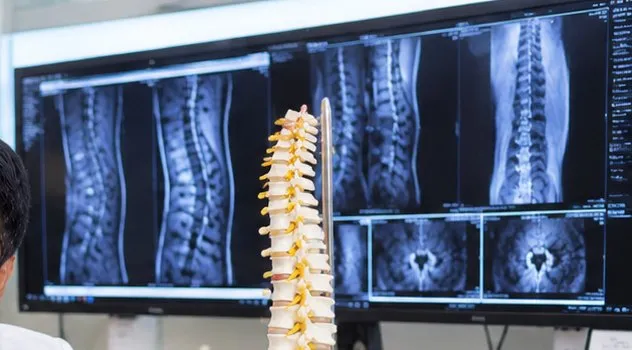
Your MRI, explained in simple words
Send it on WhatsApp before your visit
Understanding the problem
What is slip disc?
The spine has soft, cushion-like discs between the bones. A slip disc (disc prolapse or herniation) happens when the soft centre of a disc pushes out through a crack in its outer wall.
If the bulging part presses on a nearby nerve, it causes pain, tingling or weakness in the leg (in the lower back) or the arm (in the neck). The most common levels are L4 L5 and L5 S1 in the lower back.
Common causes
- Lifting heavy weight with a bent back
- Long hours of sitting, driving or two-wheeler travel
- Age-related wear of the discs
- Sudden twist or jerk
- Weak core muscles, overweight and smoking
Symptoms
Signs of slip disc
- Lower back pain that spreads to the buttock and leg
- Pain that gets worse on sitting, bending or coughing
- Tingling or numbness in the leg or foot
- Weakness in the leg or foot
- Neck pain with arm pain, if the disc is in the neck
See a doctor urgently if
- Loss of bladder or bowel control
- Numbness around the private parts or inner thighs
- Sudden weakness in one or both legs (foot drop)
Questions patients ask
Slip Disc: your questions
Have a question about your own MRI? Send it on WhatsApp and the clinic will guide you.
Can a slip disc heal on its own?
Yes, in many patients. The bulging part of the disc often shrinks over 6 to 12 weeks. Medicines, physiotherapy and good posture help it heal and control the pain meanwhile.
Which is the best treatment for a slip disc?
It depends on your symptoms and MRI. Most patients need only medicines and physiotherapy. A nerve root block helps if pain does not settle. Microdiscectomy is advised only when needed.
When is surgery needed for a slip disc?
When leg pain does not improve after 6 to 8 weeks of proper treatment, when there is weakness or foot drop, or in an emergency such as loss of bladder control.
Is L4 L5 disc bulge serious?
A disc bulge at L4 L5 is very common and usually not serious. It needs attention if it causes strong leg pain, numbness or weakness.
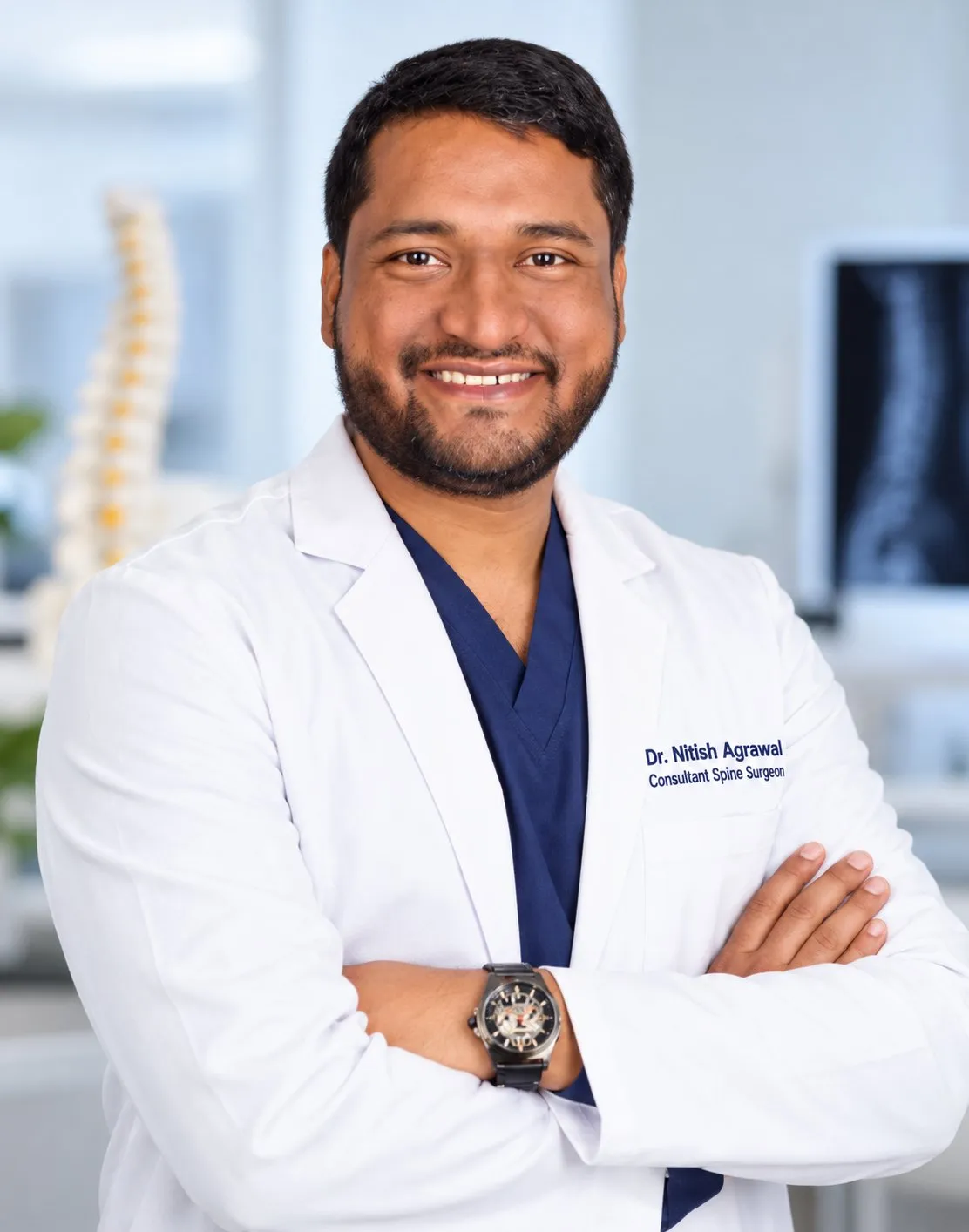
Your surgeon
Dr. Nitish Agarwal, Consultant Spine Surgeon
MBBS, Orthopaedics, Fellowship in Spine Surgery · MMC Reg. No. 2013103163 · 15+ years, 5000+ spine surgeries
Treatments for this condition